




It always shows up at the worst possible time. A big, red, monster pimple the night before a presentation, a big event, or a first date. Here’s the short answer: don’t pop it. Calm it down, treat it with a proven spot-treatment ingredient, and give it a little time. We’ll break down exactly what to do, plus how to help keep your pores clear so the next pimple is less likely to crash the party.
What is a monster pimple, exactly?
According to the American Academy of Dermatology (AAD), deep, painful pimples are usually acne nodules or cysts, which form beneath the skin’s surface. Sometimes you can feel the tender lump before you can even see it.
Pimples form when oil glands become clogged or inflamed, and there are three main culprits: excess oil (sebum), buildup of dead skin cells, and an increase in acne-causing bacteria. Most pimples last three to seven days, while deeper ones can take a few weeks to clear, per Cleveland Clinic.
How do you treat a monster pimple right now?
Step 1: Hands off
We know, it’s tempting to squeeze or pop. But the AAD warns that picking at or squeezing a nodule or cyst can make it more noticeable—not to mention raise your risk of infection, discoloration, scarring, and post-inflammatory hyperpigmentation (PIH).
And if you’re thinking about trying a DIY solution like the toothpaste trick…don’t! The myth that toothpaste heals pimples has been floating around for a long time, and it’s just that…a myth! Toothpaste is formulated to clean the hard enamel on your teeth, not treat the delicate skin on your face.
Step 2: Cleanse gently
Don’t scrub a large pimple with a rough washcloth or harsh cleansing brush—that will just cause more irritation, and it can potentially spread acne-causing bacteria or push bacteria deeper into your skin. Instead, wash your face with a gentle, non-abrasive cleanser and use your fingertips to lightly massage the cleanser, according to the AAD.
Step 3: Ues a warm compress on a deep bump
If you have a deep, under-the-skin pimple with no “head” (i.e. the white part filled with gunk), the AAD recommends using a warm, damp washcloth for 10 to 15 minutes, three times a day. Make sure to use a fresh, clean washcloth every time. This helps bring it closer to the surface so it can heal. It sounds a little counterintuitive, but you want to bring the gunky part to the surface—this will allow your acne-fighting ingredients in the next step to do their job.
Step 4: Spot treat with a proven ingredient
Benzoyl peroxide is a good choice for large, red, angry, pimples, according to the Mayo Clinic, because it penetrates deep into pores and helps kill acne-causing bacteria. Apply a thin layer twice a day, and if you have sensitive or mature skin, it’s best to start with a lower 2.5% strength. You can also go with a hydrocolloid acne patch, which helps to absorb gunk and also prevents you from touching the pimple with your fingers and accidentally spreading bacteria.
Now, keep in mind that benxoyl peroxide and hydrocolloid acne patches work best if your pimple is already at the surface. If it’s still underneath your skin, go with a salicylic acid treatment. Why? Salicylic acid can penetrate into the pore lining and help dissolve the mix of oil and dead skin that’s trapped there. When the gunk starts to come to the surface, switch to benzoyl peroxide or an acne patch.
Step 5: Call in a pro if you need to
If you have a major event and you suddenly develop a monster pimple, it’s time to call in the big guns—aka, your dermatologist. She may be able to inject the pimple with cortisone or an antibiotic, which usually makes a visible difference within 24 hours.
Important note: And if you’re getting multiple deep, painful pimples regularly (not just occasionally when you’re under stress, etc.) it’s best to see your dermatologist. At-home solutions help, but true cystic acne requires professional guidance and treatment.
How can you help prevent the next breakout?
Breakouts begin with clogged pores. That means your best long-term strategy is keeping pores clear and keeping dead skin from building up. Start with the basics, then level up your routine.
Keep your daily habits consistent
Cleveland Clinic and the AAD both recommend washing your face up to twice a day and after sweating, keeping your hands off your face, choosing non-comedogenic moisturizers and makeup, removing makeup every night, and regularly cleaning anything that touches your face, like your phone and pillowcases.
Exfoliate weekly with LUXE+ Sonic Dermaplaning
LUXE+ sweeps away the oldest layer of dead skin cells and built-up debris, along with peach fuzz, for smooth, fuzz-free skin. Flash once a week, and always load a fresh MicroFine Edge™ so you’re never spreading bacteria across your skin. One important note: Flash around any active breakout, never over it.
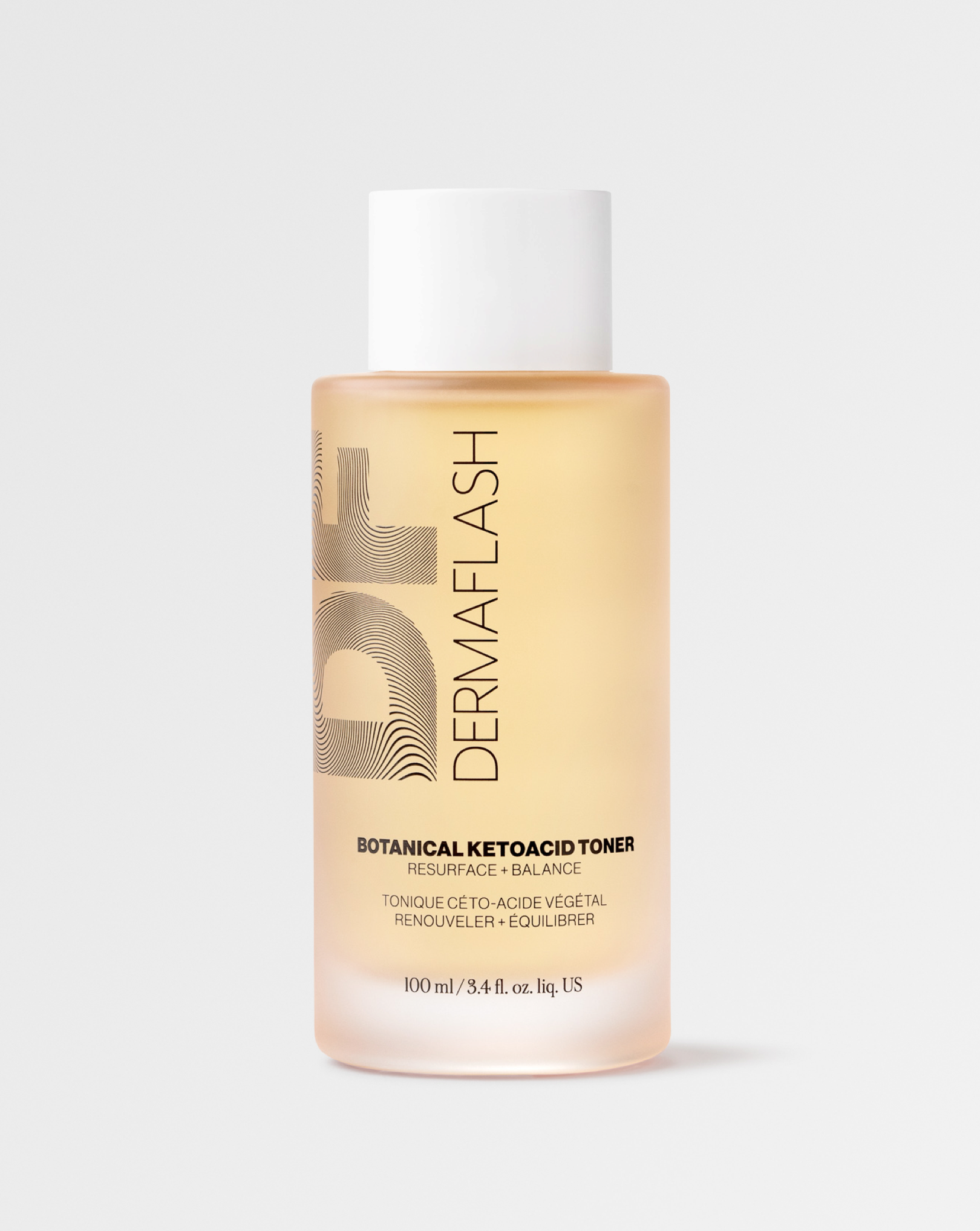
Follow with Botanical Ketoacid Toner
This non-irritating daily exfoliating toner pairs Botanical Ketoacids from the Hibiscus flower with Lactic, Malic and Encapsulated Salicylic Acid to gently exfoliate, control excess oil and clear pores without drying skin. That matters, because Cleveland Clinic notes that salicylic acid helps dissolve the dead skin cells that clog hair follicles. Use it after LUXE+ for added exfoliating benefits. It’s also safe for sensitive skin.
Unclog pores with DERMAPORE+
DERMAPORE+ Ultrasonic Pore Extractor + Skincare Infuser deep cleans and unclogs pores without pain or irritation. Mist your skin with PREP MIST, then activate Extract Mode and glide over clog-prone areas. Keep your skin wet the entire time and work around any inflamed spots (not directly over them). The ultrasonic vibration loosens trapped dirt, oil and blackheads while the ionically charged spatula draws out pore-clogging debris. Then follow with Botanical Ketoacid Toner to boost your pore-clearing results.
Note: If you’re using a prescription acne treatment, check with your dermatologist before adding exfoliation to your routine.
FAQs
Should you pop a big pimple if it has a whitehead?
No, it’s best to leave it alone. Squeezing can introduce bacteria, irritate skin, and cause scarring. Spot treat it and let it heal.
Can you dermaplane if you have a pimple?
Yes, but make sure you don’t dermaplane over any active breakouts. Flash around any active acne or open skin and use a fresh MicroFine Edge™ every time.
How long does a monster pimple last?
Most pimples clear in three to seven days, but deep pimples can take a few weeks or longer, according to Cleveland Clinic. If one won’t budge, see a board-certified dermatologist.
Sources
-
American Academy of Dermatology. Tips to treat a deep, painful pimple. https://www.aad.org/public/diseases/acne/diy/treat-deep-painful-pimple
-
American Academy of Dermatology. Acne: Tips for managing. https://www.aad.org/public/diseases/acne/skin-care/tips
-
Cleveland Clinic. Pimples: Causes, Types & Treatment. https://my.clevelandclinic.org/health/diseases/22468-pimples
-
Cleveland Clinic Health Essentials. How To Get Rid of a Pimple — Stat! https://health.clevelandclinic.org/a-dermatologists-advice-on-how-to-get-rid-of-a-pimple


