



Struggling with winter skin redness? Discover the most common causes of red skin in the winter, plus easy skincare tips to soothe irritation fast.
Why does my skin get red in the winter?
For many people, rosy cheeks and red noses are a common side effect of winter weather—especially if your skin tone is on the pale side. And while that rosy après-ski glow can be flattering, when it doesn’t go away, well, that can become a problem. Here are the top 5 causes of winter skin redness, plus dermatologist-approved tips on how to avoid looking like Rudolph when temperatures drop.
Winter redness cause #1: Cold Weather & Wind Exposure
As New York City dermatologist Gervaise Gerstner, M.D., explains in Vogue magazine, winter skin redness happens “because our bodies are trying to heat themselves, bringing blood close to the surface of the skin.” That glowing red nose you see after a ski run (or from spending a few minutes outside in frigid weather) means that your body is trying to keep itself warm. When you add wind into the mix, redness can become even more pronounced. Harsh wind can disrupt your skin barrier and increase irritation, leaving your complexion even more red and inflamed.
Your Easy Fix
You can help prevent skin irritation from wind and cold weather by switching to a richer moisturizer with ceramides or squalane and layering it underneath your sunscreen. And speaking of SPF, formulas with zinc oxide aren’t just beneficial for summertime—they’re ideal in the winter, too. “Zinc oxide forms a physical barrier on your skin,” explains licensed master esthetician Kendal Galette. “This helps hold in moisture and keeps harsh winds from stripping away your skin's natural oils.”
Winter redness cause #2: Dry Indoor Air (Low Humidity)
Indoor heating can literally pull moisture away from your skin's outermost layer (aka your “stratum corneum”). When this happens, the natural lipids that hold your skin cells together start to weaken and become compromised. This damage to your skin barrier leaves your skin vulnerable, allowing irritants and allergens to enter and triggering redness and inflammation.
Your Easy Fix
You’ve probably heard it a million times, but it’s worth repeating: A humidifier is your best friend in the fight against dry winter skin and parched indoor air. Using a humidifier at night as part of your winter skincare routine adds back the moisture you’ve lost during the day and helps to reduce the look of redness. It also helps your skin repair itself more effectively during those crucial hours of 10 p.m. to 2 p.m.—when cellular regeneration, collagen production, and blood circulation are at their highest.
Winter redness cause #3: Over-Exfoliation
Using harsh exfoliating acids, retinoids, or grainy scrubs can cause redness and irritation all year long—but especially in the winter. As we’ve mentioned, cold weather, harsh wind and dry indoor air can all damage your skin barrier. When you add overly aggressive exfoliation to the mix, your skin can end up red and inflamed, with a “thin” or tight look. (If your skin looks red, shiny and “stretched,” you’re most likely over-exfoliating.)
Your Easy Fix
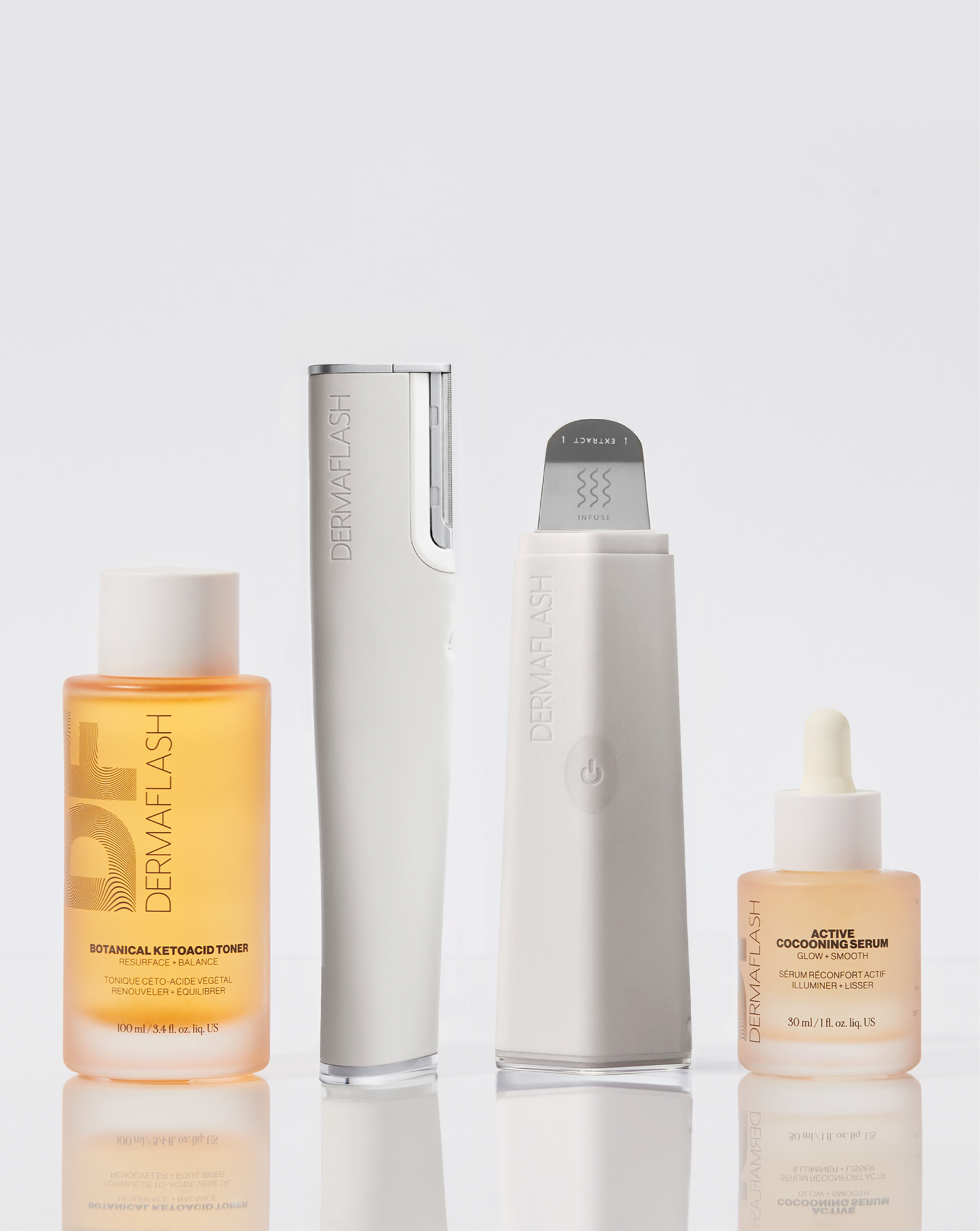
If you’re wondering how to calm red skin, first, take a look at how often you’re exfoliating. For most people, one session of spa-quality exfoliation per week is all you need. LUXE+ Sonic Dermaplaning gives you professional grade results at home and only needs to be done once a week. (It also removes peach fuzz and helps your skincare to sink in more effectively—a huge plus in the winter.) If you choose, you can also use a gentle, sensitive-skin safe liquid exfoliant 1-2 times per day.
Winter redness cause #4: Hot Showers & Frequent Face Washing
We get it, sinking into a hot bath or turning up the hot water during your shower feels great on a frigid day. But in the long term, it could be contributing to facial redness. Hot water and over-cleansing can strip away natural oils, leaving your skin dry and inflamed.
Your Easy Fix
Use warm water (not super-hot) when you shower or bathe, and switch to a gentle sulfate-free cleanser that won’t strip your skin. Don’t wash your face more than twice a day. If your skin is extra dry, you may only need to cleanse at night and simply splash your face with lukewarm water in the morning.
Winter redness cause #5: Seasonal Skin Sensitivity & Rosacea Flare-Ups
Winter weather is a trigger for rosacea flareups, mostly because of the extreme temperature shifts. Constantly going from cold-to-warm temperatures (combined with dry air) can damage the skin's moisture barrier and cause a flareup. Hot drinks, alcohol, spicy foods, and stress from the busy holiday season can also worsen rosacea symptoms by dilating blood vessels.
Your Easy Fix
If you have (or suspect you have) rosacea, it’s best to consult your dermatologist. She can help you identify and avoid personal triggers, and prescribe the right products and treatments to help you manage the condition. In some cases, prescription creams and medications—or modalities like Intense Pulsed Light or laser therapy—are your best bets for managing rosacea.
Ready to soothe your winter skin redness? Start with these simple fixes today and keep your skin looking calm all winter long.