



“Peach fuzz after chemo” is one of the most searched and most talked-about parts of recovery in breast cancer survivor communities — it comes up in forums, support groups, and conversations between survivors comparing notes on their personal experiences. As your hair grows back after treatment, it's common to notice something new: an increased appearance of fine, soft, fuzzy hair on your cheeks, jawline, or neck. It's a real and widely shared experience for many women — and there are scientific reasons it happens, and real ways to manage it.
Why peach fuzz happens after chemo
Chemotherapy targets fast-dividing cells. This is why it affects hair follicles along with cancer cells — causing what's medically known as “anagen effluvium” (i.e. rapid hair loss from medical treatment). When treatment ends, hair follicles start “waking back up,” and the first hair to come in is often finer, softer, and lighter than what grew there before. It doesn't just show up on your scalp — many survivors notice it on the face for the first time, sometimes in a beard-like pattern along the cheeks and jaw.
A rough (and highly individual) timeline looks like:
- 2–6 weeks after your last treatment: the first fine, soft hair appears
- 1–3 months: more visible coverage and texture
- 6–12 months: hair starts resembling its pre-treatment thickness
- 12–18 months: texture and color typically settle back to normal
Texture and color changes are extremely common during this window — hair often comes back curlier, straighter, or a different shade than before ("chemo curls" is the term you'll see for this, too). It usually evens out over time.
Your skin isn't quite "back to normal" yet either
Your skin often remains more sensitized for a while after treatment ends. Research on post-treatment skin recovery has found that chemotherapy can thin the skin, slow cell turnover, and reduce the skin's frontline immune defenses for a period after treatment stops.
In practical terms, that means your skin can be drier, more reactive, and slower to bounce back from irritation than it was before. This matters when deciding when and how when to remove any new facial hair — you’ll need a gentle method that’s not going to disrupt your skin barrier or cause further irritation.
A gentler way to manage post-chemo peach fuzz: Sonic Dermaplaning
Waxing and chemical depilatories both work by pulling at or chemically breaking down hair — which is not ideal on skin that's already more reactive than usual. Sonic dermaplaning takes a different approach: no chemicals, no pulling at the root, no waiting for hair to reach a certain length. Just a smooth, precise pass that removes the fuzz and leaves skin instantly soft.
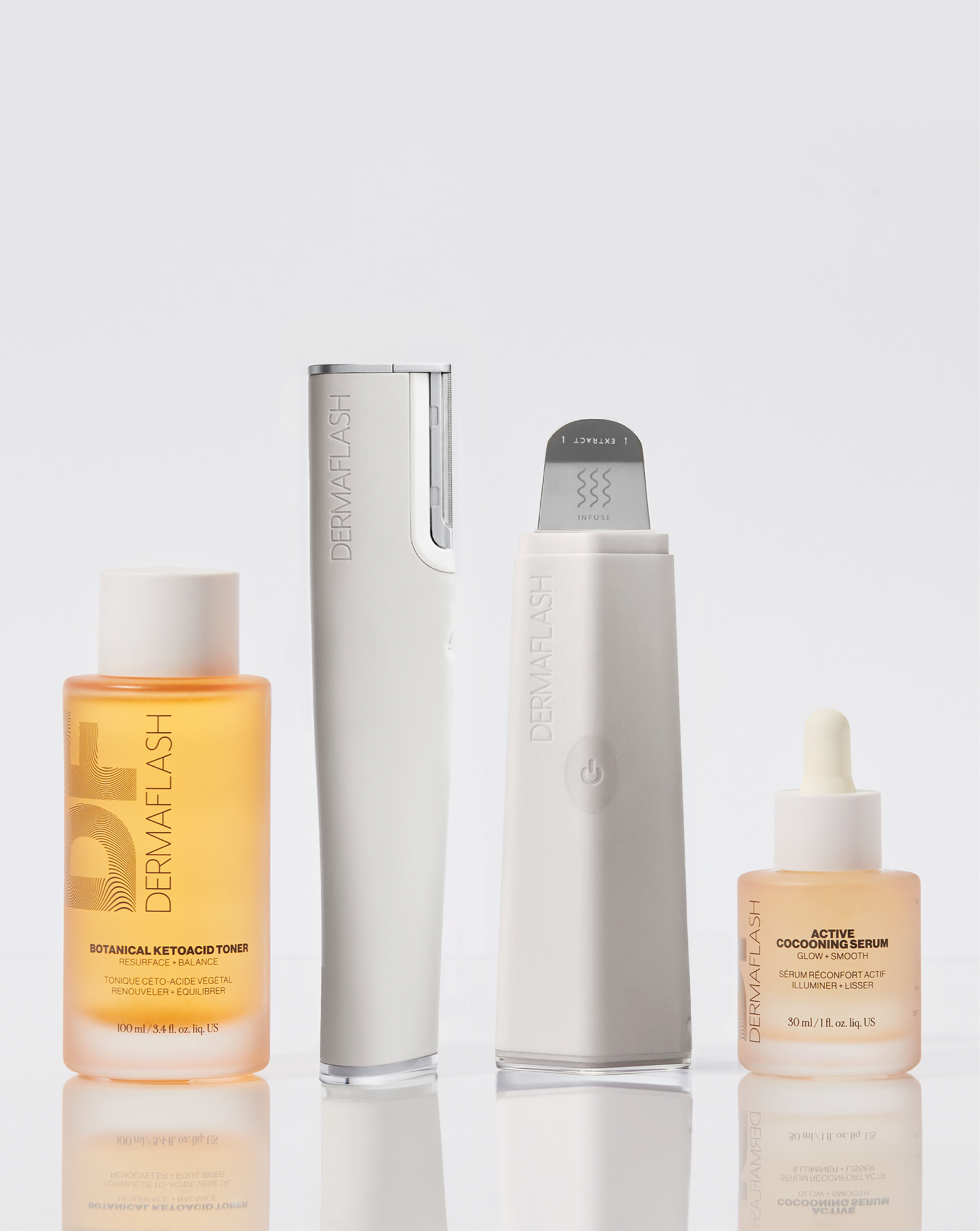
LUXE+ Sonic Dermaplaning uses sonic technology to give you an easy glide across all the curves of your face – the sonic waves help the device glide smoothly, without any friction, pulling or tugging. What’s more, the patented MicroFine Edge™ has a special Safety Cage that protects your skin from nicks and cuts (unlike a disposable razor, which has no safeguards).
Frequently Asked Questions
How do I know if it's safe to dermaplane after chemo?
Always check with your care team to get their clearance before beginning any new skincare regimen. Once you do get the green light, sonic dermaplaning is a gentle way to handle the fuzz that's appropriate for all skin types, including sensitive.
What is "peach fuzz" after chemo?
It's the soft, fine facial hair — often on your cheeks, jawline, or neck — that appears as hair follicles reactivate after chemotherapy ends. It's a normal, temporary part of hair regrowth, not a side effect specific to one type of cancer or treatment.
Does shaving or dermaplaning make hair grow back thicker or darker?
No — this is a common myth, not a dermatological fact. Any changes in texture or color after chemo come from the regrowth process itself, not from removing the fuzz.
Is dermaplaning safe for sensitive, post-chemo skin?
Once your care team has cleared you for facial treatments, sonic dermaplaning is a gentle, non-chemical option suitable for all skin types, including sensitive skin — since it doesn't involve pulling at the root or chemical exposure the way waxing or depilatories do.
How long does peach fuzz last?
For most people, texture and color even out within about 12–18 months as follicles fully recalibrate, though this varies person to person.
The bottom line
Peach fuzz after chemo is common, temporary, and nothing to feel self-conscious about. If it bothers you, there are gentle ways to manage it — loop in your care team on timing, keep your routine simple, and be patient with your skin as it recalibrates. It's one small, manageable piece of a much bigger recovery.
This October, we're flashing for the cure
Breast Cancer Awareness Month is personal to us at DERMAFLASH. This October, we're donating 25% of net sales from all Pop Pink devices sold on dermaflash.com to the Breast Cancer Research Foundation, in support of their mission to prevent and cure breast cancer.
This post is for general information and isn't medical advice. Always check with your oncologist or care team before resuming any skincare or hair-removal routine after treatment.


