



Hair thinning is one of those changes that can catch you off guard, especially in your 40s and 50s. One day you wake up and see more hair in your brush, or notice your ponytail looks thinner. There are countless hair regrowth treatments out there, but there's one in particular that's getting a lot of buzz now: oral minoxidil. The reason? Unlike some treatments that just offer hope in a bottle, oral minoxidil works to regrow hair. But there’s a catch—it can also cause an increase in facial hair growth. We’ll explain why—and give you an easy solution for managing facial fuzz if you’re taking oral minoxidil.
Why Does Hair Thin in Your 40s, 50s and Beyond?
During perimenopause and menopause, your levels of estrogen and progesterone drop. These hormones help keep your hair in its growth phase, so when levels fall, the growth phase shortens and shedding increases. Reduced estrogen can also cause blood circulation to your scalp to decrease, which means your hair follicles are getting less of the nutrients they need to thrive. In addition, the natural aging process causes something called “follicle miniaturization,” where your individual hair follicles shrink, meaning each strand becomes thinner and produces less hair.
How Does Oral Minoxidil Work to Regrow Hair?
Minoxidil is a “vasodilator,” meaning it widens blood vessels and increases blood flow. This means your hair follicles get more oxygen and nutrients, which is believed to be the mechanism behind its hair-regrowth effect. As Dr. Oma Agbai, MD, founding director of multicultural dermatology and hair restoration at the UC Davis School of Medicine, explained in Allure, research on oral minoxidil has expanded significantly over the last several years, with a surge of clinical studies now supporting its safety and effectiveness at low doses. She called it “one of the biggest advances in hair loss treatment in the past decade,” and it's become one of the most frequently prescribed options at her hair clinic.
Why Does Oral Minoxidil Cause Facial Hair Growth?
Here's the thing: when you take minoxidil as a pill instead of applying it to your scalp, it travels through your entire bloodstream. That means it can reach hair follicles anywhere on your body, which is why the oral form is more likely than the topical version to cause noticeable hair growth on your face.
New research backs this up: A 2026 study in the Journal of Dermatological Treatment surveyed 102 women taking low-dose oral minoxidil for female pattern hair loss and found that 71.6 percent reported unwanted hair growth, most often on the face, arms, and legs. Even so, 93.2 percent of them chose to keep taking it. In other words, most people decide the regrowth results are worth a little extra facial fuzz.
How Do You Get Rid of Facial Hair Caused by Minoxidil?
To maintain the scalp hair growth you're seeing, you'll need to keep taking oral minoxidil, under your doctor's supervision, of course. This means you need a simple, reliable method of facial hair removal—ideally, one that you can do at home, and that won't cause skin irritation.
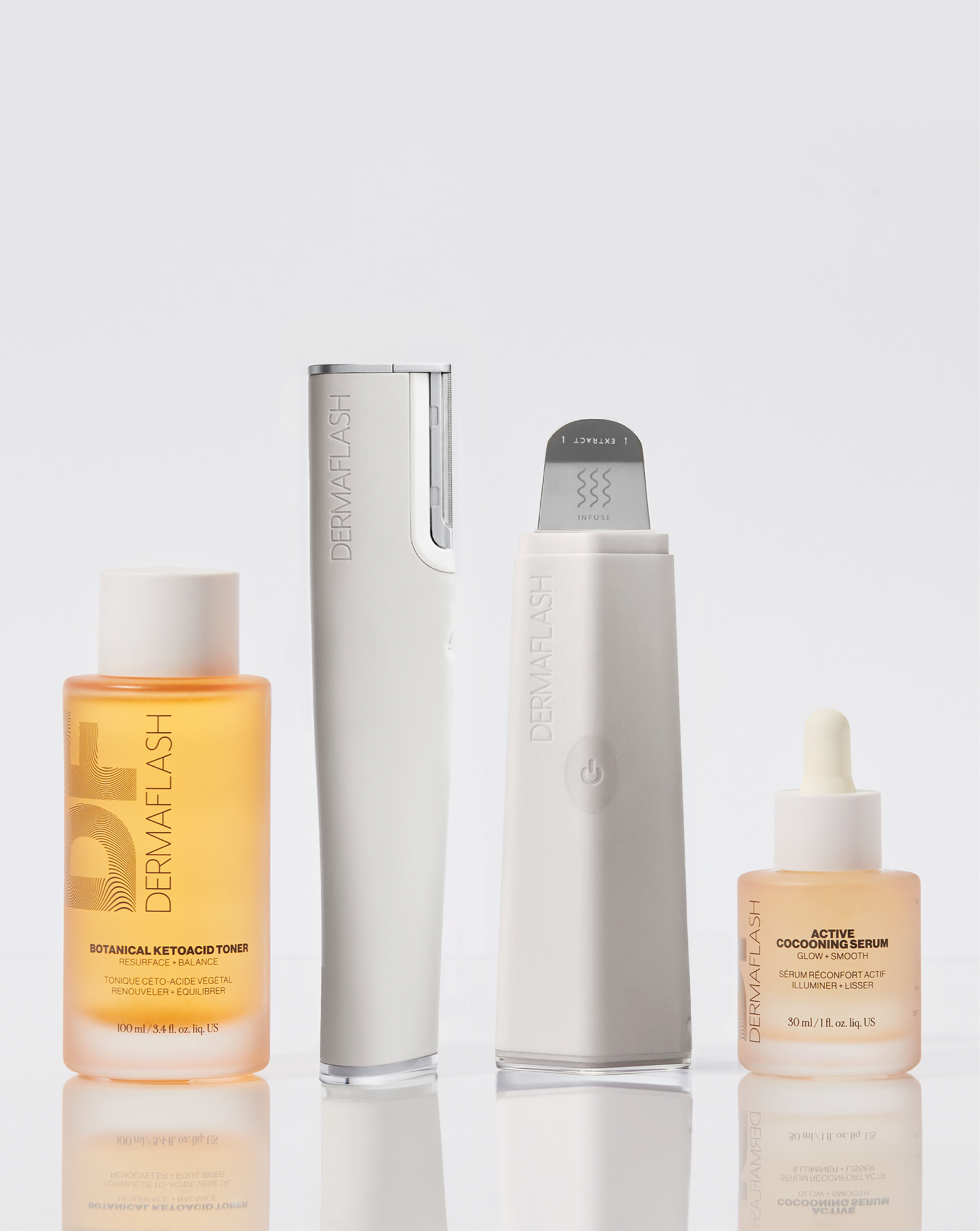
Sonic dermaplaning with LUXE+ is an easy effective, at-home solution that keeps your face fuzz-free, and it works alongside any other treatments your dermatologist recommends.
LUXE+ uses multi-patented sonic technology with 14K sonic vibrations per minute and a proprietary MicroFine Edge™ to gently remove peach fuzz and dead skin cells. The high-level sonic waves allow the device to glide effortlessly over your face, and the patented safety cage protects your skin from nicks and cuts. It’s completely unlike a razor, which offers no safety features and doesn’t have any sonic technology to ease glide.
Using LUXE+ once per week will keep your facial fuzz in check, so you can stay focused on the hair growth results you're working toward. And there’s a bonus, too—in the form of younger-looking skin. In an independent clinical study, 97 percent of participants who used LUXE+ once a week for four weeks had less visible fine lines and wrinkles, and 94 percent had a reduced appearance of dark spots. Source: instrumental analysis after 4 weeks.
Will Dermaplaning Make Facial Hair Grow Back Thicker or Darker?
This is an old myth and it simply isn’t true. Dermaplaning only removes hair from the surface of the skin, it doesn’t affect the hair follicle, so hair grows back exactly as it would have otherwise.
The Bottom Line
If minoxidil is giving you back thicker, fuller hair, that's worth celebrating. Extra peach fuzz is a small, manageable trade-off—and with LUXE+ you have the tool you need to manage facial fuzz and improve your skin in the process.
Frequently Asked Questions
Does oral minoxidil cause facial hair growth in women?
Yes. Because oral minoxidil works systemically, increasing blood flow throughout the body, it can stimulate hair growth beyond the scalp, most commonly on the face, arms, and legs. A 2026 study in the Journal of Dermatological Treatment found 71.6 percent of women taking it for female pattern hair loss reported unwanted hair growth.
Will removing facial hair with dermaplaning make it grow back thicker?
No. Sonic dermaplaning with LUXE+ removes hair from the surface of the skin only. It does not affect the hair follicle, so hair will not grow back thicker, darker, or faster.
How often should I dermaplane if I'm managing minoxidil-related facial hair?
Once a week is typically enough to keep facial fuzz at bay with LUXE+.
Does facial hair from minoxidil go away if I stop taking it?
Hair growth linked to minoxidil is generally understood to be tied to continued use, but every person responds differently, so any changes should be discussed with your doctor.
This information is for informational purposes only and does not constitute professional medical advice. Always seek the advice of a qualified healthcare provider with any questions you may have regarding a medical condition.


