



Yes, sonic dermaplaning and at-home red light therapy are two high-tech skincare modalities that work well together, because they support your skin’s overall health in different (but complementary) ways. Let’s take a deeper dive and find out how to use these two tools as part of your skincare routine.
What Sonic Dermaplaning Does for Your Skin
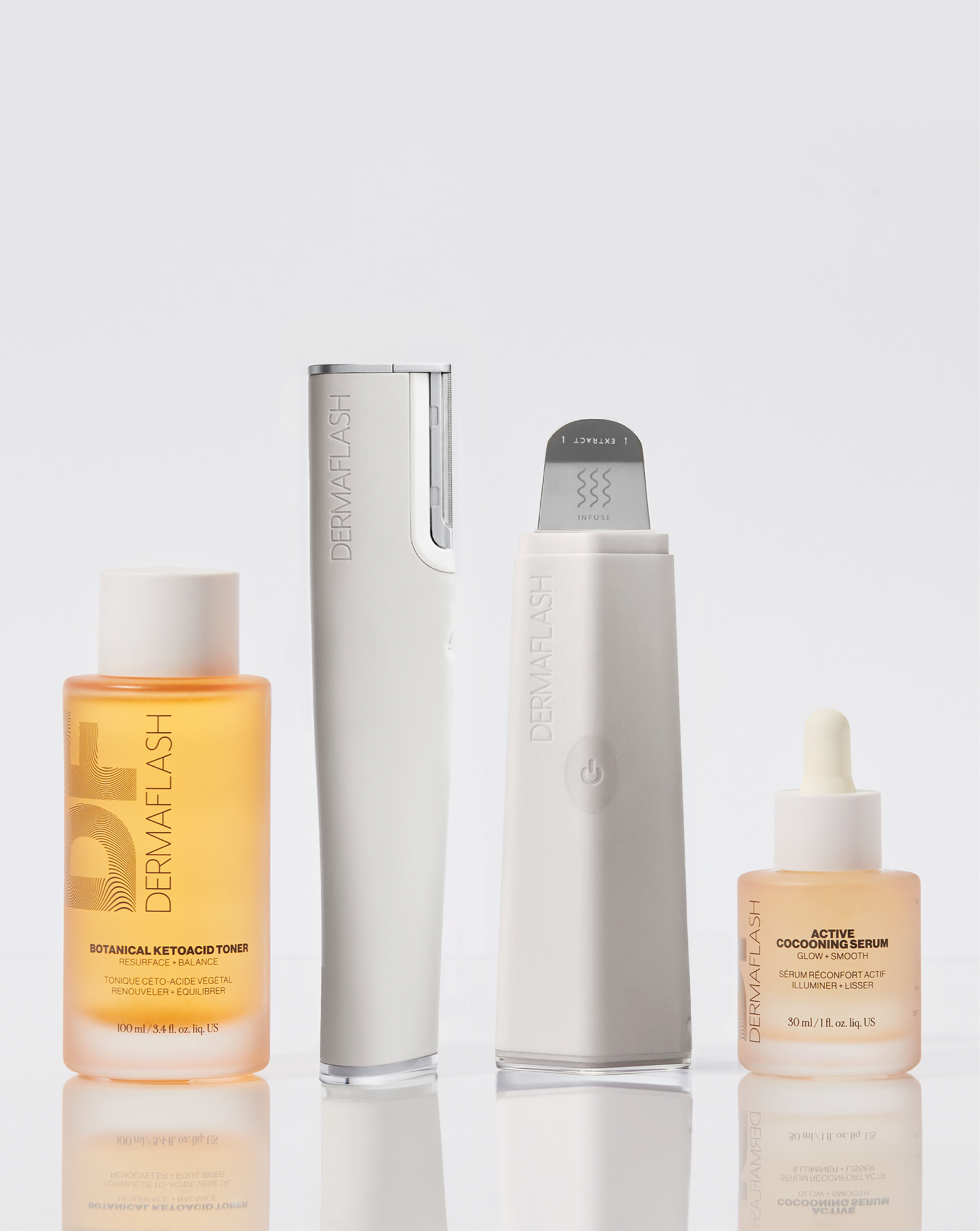
DERMAFLASH LUXE+ is a sonic dermaplaning device that works on the surface of your skin to gently exfoliate dead skin cells and remove peach fuzz—without the nicks, cuts or irritation of a traditional razor. It uses a custom-engineered MicroFine Edge™ with a patented safety cage to protect your skin, and it’s powered by 14K sonic vibrations per minute. The high-level sonic vibration allows the device to glide smoothly and effortlessly the contours of your face.
You’ll see more radiant skin after just one use, but that’s not all. When used consistently once a week, the gentle exfoliation helps to support collagen production and keep your skin looking smoother, bouncier, healthier, and more even toned.
The proof:
-
100% of users saw an instant improvement in skin texture after just one use (consumer panel survey)
-
97% had less visible fine lines and wrinkles after 4 weeks (instrumental analysis)
-
94% had a reduced appearance of dark spots after 4 weeks (instrumental analysis)
Removing dead skin cells and peach fuzz also clears away buildup that can block your skincare products from absorbing properly. When that layer of debris is gone, your serums and moisturizers will penetrate better, and your makeup will apply more smoothly.
What’s more, any other modalities you use (including red light therapy) will be able to work optimally. In other words, dermaplaning sets your skin up success—no matter what other treatments you’re using.
What Red Light Therapy Does for Your Skin
Red light therapy is an LED-based treatment that's been used in med spas and dermatology offices for years and is now widely available as an at-home device. Rather than working on the skin's surface, it works from within: specific wavelengths of red and near-infrared light penetrate the skin and reach your cells' mitochondria — the part of the cell responsible for generating energy. With more energy to work with, cells can repair and renew themselves more efficiently.
Over consistent use, that translates into visible benefits: smoother-looking fine lines, firmer and more even texture, a complexion that bounces back faster from everyday stressors like sun exposure, and a calmer look for occasional redness or breakouts.
Unlike dermaplaning, red light therapy isn't an exfoliation tool and its benefits build gradually—it requires consistent sessions over several weeks to see visible change. If you're using a red-light device, stick with it—and always follow the manufacturer's specific instructions for frequency, distance, and session length.
How Dermaplaning and Red Light Therapy Work Together
Dermaplaning improves your skin + clears the way. By removing dead skin cells and peach fuzz, LUXE+ clears away surface buildup that can sit between your skin and anything you apply afterward — which is also why skincare absorbs more effectively post-Flash.
Red light therapy builds from there. With a smoother, debris-free surface, your at-home LED sessions are working on skin that's already been prepped rather than fighting through flaky texture.
A Simple At-Home Routine
If you want to build both modalities into your week, here's how to do it:
-
Cleanse. Start with a clean, dry face. If it's a dermaplaning day, prep with PREFLASH® Cleanser and pat skin thoroughly dry.
-
Dermaplane once a week. Load a fresh MicroFine Edge™, hold LUXE+ at a 45° angle, and Flash using short, feathery strokes.
-
Do your red light session on clean skin. Most LED devices are designed to be used on bare, product-free skin so light can reach the surface directly — check your device's instructions for exact timing.
-
Layer skincare after. Apply your serum or moisturizer once your light session is done. On non-dermaplaning days, red light therapy still fits in on its own, following whatever frequency your device recommends. One to try: HYDRAFLASH Active Cocooning Serum.
FAQ: Dermaplaning and Red Light Therapy
Can I do red light therapy on the same day I dermaplane?
Yes. A common approach is to dermaplane first, then do your red light session on the freshly exfoliated, clean skin, and follow with serum or moisturizer afterward.
How often should I dermaplane if I'm also using red light therapy?
Stick to once a week with LUXE+, regardless of how often you use red light therapy. Over-exfoliating isn't necessary to get results, and weekly use is what LUXE+ is clinically tested and designed for.
Will combining the two speed up my results?
There's no independent clinical data testing dermaplaning and red light therapy together, so we can't make that claim. What we can say is that each modality is tested and effective on its own, and there's no conflict in using both as part of the same routine.
Is this combination safe for sensitive skin?
LUXE+ is safe for sensitive skin and offers two sonic speeds so you can choose what feels best. For red light therapy, sensitivity guidance varies by device, so check your specific manufacturer's recommendations.


