



We’re here tell you that, yes, you still need to apply sunscreen every day in the fall. Cooler mornings and shorter afternoons can make sunscreen feel like a summer-only step, but the sun doesn’t clock out when the season changes. The American Academy of Dermatology (AAD) recommends a broad-spectrum sunscreen with SPF 30 or higher every day. The reason is straightforward: the sun emits harmful UV rays year-round, which means your skin is vulnerable to damage even when the weather cools down. Let’s take a deeper dive.
Why Do You Still Need Sunscreen After Summer Ends?
- Clouds aren’t a shield from the sun. According to the AAD, up to 80% of the sun’s harmful UV rays can penetrate clouds.
- UVA rays don’t follow the thermometer. UVB rays (which are responsible for causing sunburn) are strongest in summer, but UVA rays (which penetrate more deeply and cause sun damage including fine lines, wrinkles and dark spots) are present in equal amounts all year. And being inside or in the car doesn’t protect your skin from UVA rays. UVA rays can pass through glass. In fact, the Skin Cancer Foundation notes that up to 50% of UVA can get through untreated car side windows. If you spend a lot of time driving, SPF is a must.
- Fall is exfoliation season. After a summer of sweat and sunscreen, many people start to focus on exfoliation again in the fall. Any type of exfoliation increases your skin’s sensitivity to the sun, so no matter what method you’re using, it’s essential to apply sunscreen daily.
What’s the Difference Between Physical and Chemical Sunscreen?
It comes down to the active ingredients. Physical (mineral) sunscreens use zinc oxide, titanium dioxide or a combination of both. They sit on the surface of your skin and help block UV rays. Dermatologists recommend mineral formulas for sensitive skin. The trade-off: some can leave a visible white cast, especially on deeper skin tones, according to Cleveland Clinic, though newer sheer and tinted formulas help.
Chemical sunscreens include any formula without zinc oxide or titanium dioxide as an active. They absorb UV rays rather than sitting on top of skin, and they tend to feel lighter and blend in without a cast.
Hybrid sunscreens combine both types of filters.
Which Sunscreen Is Best for Your Skin Type?
- Sensitive or reactive skin: Start with a mineral formula, which dermatologists recommend for sensitive skin.
- Oily or congestion-prone skin: Look for a sunscreen labeled “non-comedogenic” or “won’t clog pores,” as the AAD advises. Lightweight, oil-free textures in either category work well.
- Dry skin: A creamier, hydrating formula of either type keeps skin comfortable as the air turns crisp.
- Deeper skin tones: A sheer or tinted mineral, or a chemical formula, helps you skip the white cast.
The best sunscreen is the one you'll wear every day!
Pro tip: Most of us under-apply SPF. The AAD reports that many people apply only 20–50% of the sunscreen needed to get the SPF on the label. For your face, that means at least one teaspoon, roughly the length of your index and middle fingers.
How Do You Keep Daily SPF from Clogging Your Pores?
Skipping sunscreen isn’t the answer. Layering SPF daily (plus makeup and your skin’s natural oil) can leave pores feeling congested, so the fix is a routine that clears what builds up.
-
Double cleanse every evening to thoroughly remove sunscreen and makeup.
-
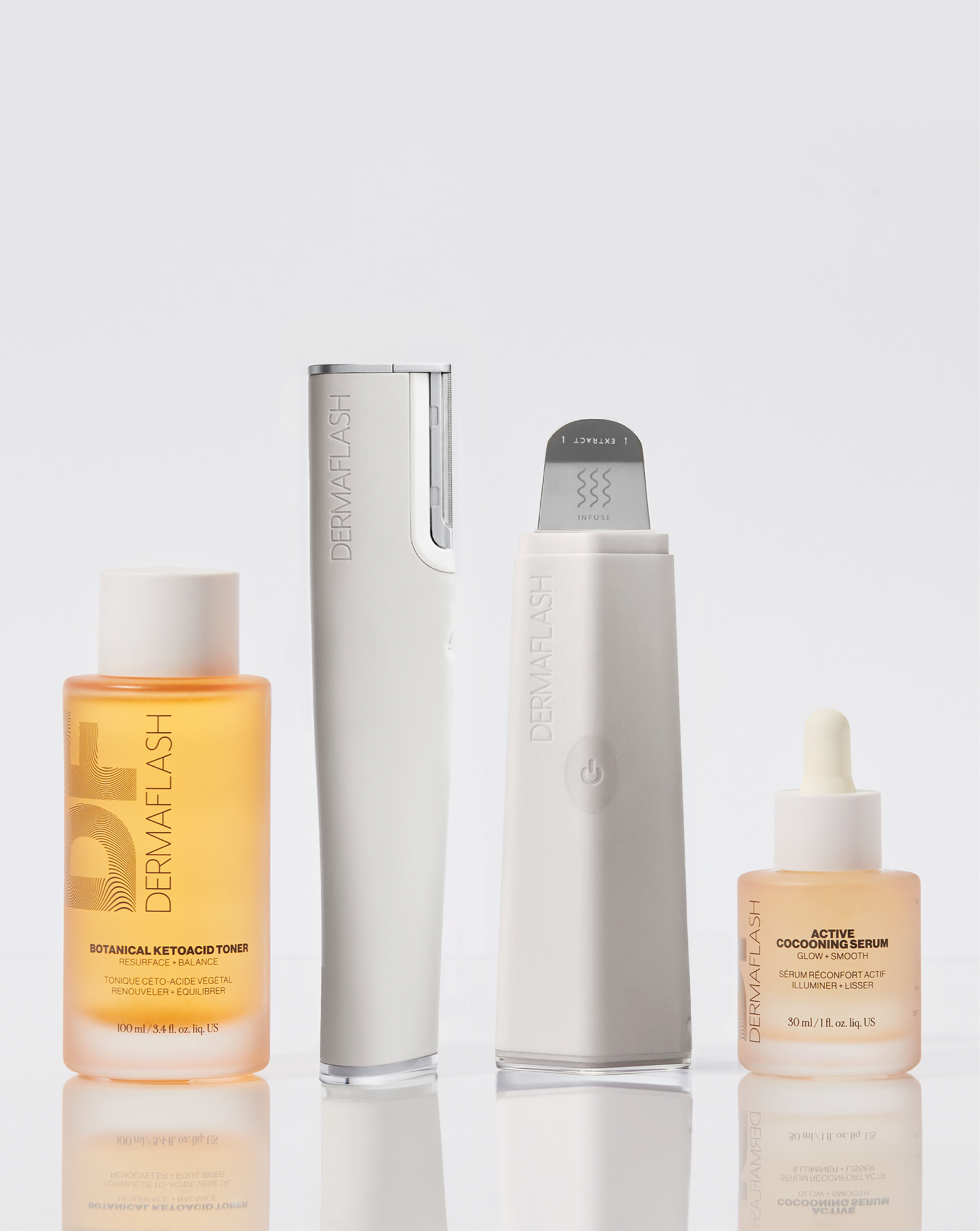
Several times per week (the frequency is up to you), use DERMAPORE+ to unclog pores. Wet your skin with PREP MIST, activate Extract Mode, and glide the spatula over clog-prone areas. The devise uses high-level ultrasonic vibration to gently loosen dirt, oil and debris, while the ionically charged spatula draws it out, without pain or irritation. 97% had a significant reduction in pore size (instrumental analysis immediately after use with PREP MIST).
-
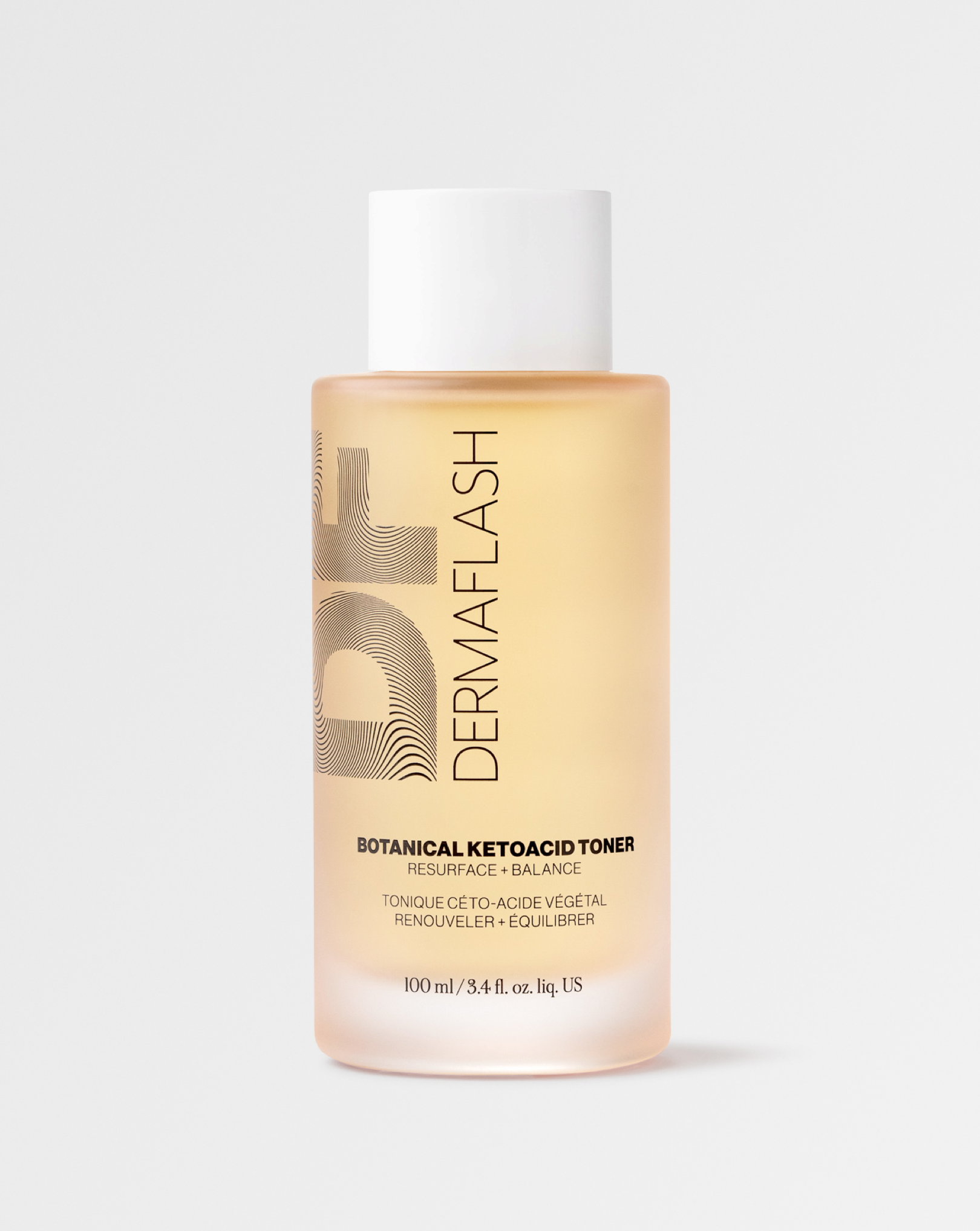
Apply Botanical Ketoacid Toner daily, before your serum, moisturizer and sunscreen. Its gentle blend of Botanical Ketoacids plus Lactic, Malic and Encapsulated Salicylic Acid sweeps away dull, dead skin cells and helps clear pores without drying. It’s safe for sensitive skin and has real, proven benefits for you skin: In an independent clinical study, 97% showed improvement in pore size (instrumental analysis after using 2x per day for 4 weeks). You can use morning, evening or both—it’s up to you and your skin.
Protect every morning, unclog pores regularly, and stay protected—and glowing!— all season long.


