



Dark spots, uneven skin tone and post-acne marks are all forms of hyperpigmentation—one of the most common skincare concerns across all skin types, tones and ages. If you’ve ever tried to fade the appearance of dark spots, you know that it can be tricky. But it is possible to see results. With the right at-home tools and skincare routine, you can visibly improve skin tone over time. The key is consistency!
Read on to find out more about what triggers hyperpigmentation and learn how you can achieve more even skin.
What Is Hyperpigmentation?
Hyperpigmentation occurs when certain areas of your skin produce more melanin than usual. Melanin is the pigment responsible for your skin's color. When pigment-producing skin cells (known as melanocytes) produce too much melanin, it can show up as patches or spots that are darker than the surrounding skin.
Sun exposure, inflammation, hormones or the natural aging process can all trigger melanocytes to make too much pigment. Ready to learn more? Let’s look at some of the most common types of hyperpigmentation to better understand the causes.
Most Common Types of Hyperpigmentation
Sun-Induced Hyperpigmentation (Solar Lentigines)
Often called age spots or liver spots, these flat darkened patches typically appear on areas most exposed to the sun—like your face, hands, chest, and shoulders. UV rays stimulate melanin production as a protective response, and over time (especially without consistent SPF use) that excess pigment accumulates and becomes visible. These spots tend to develop gradually and are most common in adults 40 and older, though they can appear earlier with significant sun exposure.
Post-Inflammatory Hyperpigmentation (PIH)
PIH spots are dark marks left behind after your skin heals from an injury or inflammation. Ever have a stubborn mark after an acne breakout has healed? That’s PIH. It happens because your pigment-producing cells can shift into “overdrive” during the healing process and deposit extra pigment in the affected area. PIH tends to resolve with time, but without intervention it can linger for months.
People with deeper skin tones are often more prone to PIH because melanocytes are naturally more active—which is one reason that any skincare approach targeting hyperpigmentation should be thoughtful and consistent, not aggressive. The last thing you want to do is cause more inflammation.
Hormonal Hyperpigmentation (Melasma)
Melasma is characterized by larger, symmetrical patches of discoloration, most often on the forehead, cheeks, upper lip and chin. It's driven by hormonal fluctuations like pregnancy (sometimes called the "mask of pregnancy"), oral contraceptive use, or hormone therapy—and tends to worsen with sun exposure. Because it's hormonally driven, melasma can be one of the more persistent and difficult types of hyperpigmentation to address.
Age-Related Hyperpigmentation
As skin matures, its ability to regulate melanin production and turn over dead skin cells slows down. This means pigment can accumulate more easily, and the mechanisms that help naturally fade dark spots become less efficient. Regular exfoliation and targeted skincare actives become increasingly important for maintaining an even, luminous complexion with age.
What Causes Hyperpigmentation? The Inflammation Connection
One of the most important things to understand about hyperpigmentation is the role of inflammation. Whether it's a blemish, sun damage, or environmental stress, many forms of hyperpigmentation share the same underlying trigger: inflammation activates melanocytes, which ramp up pigment production. A comprehensive hyperpigmentation strategy isn't just about brightening products—it's also about calming your skin and reducing daily inflammation, so you can help prevent dark spots from forming in the first place.
Heat is another factor many people overlook. Most of us know that UV rays can trigger dark spots, but many people don’t realize that hot weather and sweaty, steamy workout sessions can also stimulate melanin production. Keeping your skin cool and calm is an important part of managing hyperpigmentation—especially in warmer months.
Your DERMAFLASH Protocol for Preventing + Correcting Hyperpigmentation
Step 1: Exfoliate Consistently with LUXE+
Regular exfoliation is essential to managing hyperpigmentation. When dead, pigmented skin cells accumulate on your skin’s surface, they make dark spots appear more pronounced. Removing dull, dead skin cells allows newer and more evenly pigmented skin cells to come forward. In addition, removing that layer of buildup allows your skincare products to sink in and do their job. “Active ingredients can penetrate more effectively when they’re not blocked by excess dead skin and peach fuzz,” explains licensed master esthetician Billie Jo Bond.
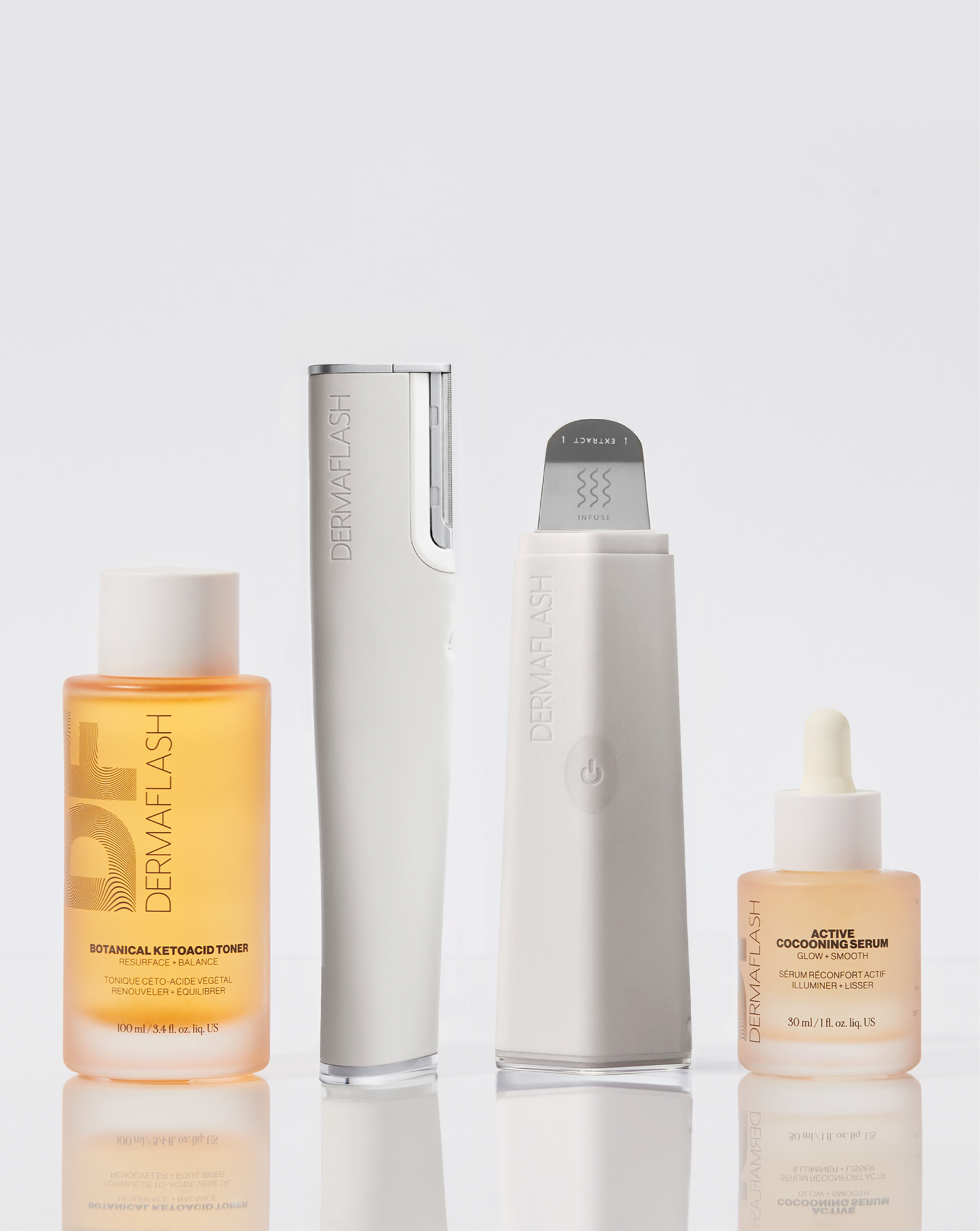
DERMAFLASH LUXE+ uses proprietary Sonic Technology to safely and gently remove dead skin cells and peach fuzz in one step. The result is an instantly smoother, more radiant complexion—and skin that's primed to absorb active ingredients far more effectively.
In an independent clinical study using instrumental skin analysis, 94% of participants showed improvement in hyperpigmentation and dark spots after four weeks of consistent use and 100% said their skin looked more even.
Use LUXE+ once per week with a fresh MicroFine Edge™ for best results. Its patented advanced safety features protect skin from nicks and scrapes, and it's suitable for all skin types, including sensitive.
Step 2: Brighten + Target Pigmentation with HYDRAFLASH Active Cocooning Serum
Exfoliation helps to remove excess surface pigment, but targeted actives work at the cellular level to support a more even, luminous complexion over time. HYDRAFLASH Active Cocooning Serum is formulated with precisely chosen ingredients that address both brightness and overall skin health.
Key actives include:
- Smart Pentapeptide: Strengthens, revitalizes and visibly brightens skin tone
- Niacinamide: Brightening, barrier-strengthening, anti-inflammatory and helps visibly even out skin tone
- Ectoin: Reduces inflammation while protecting skin from UV, pollution and blue light (three of the primary external triggers for hyperpigmentation)
- Hyaluronic Acid: Hydrolyzed for deeper penetration, keeping skin plumped and barrier-supported
Use HYDRAFLASH twice a day (morning and night) as part of your hyperpigmentation management routine. And always HYDRAFLASH after using LUXE+ Sonic Dermaplaning. Freshly Flashed skin absorbs skincare significantly more effectively, which means those brightening actives can get to work faster.
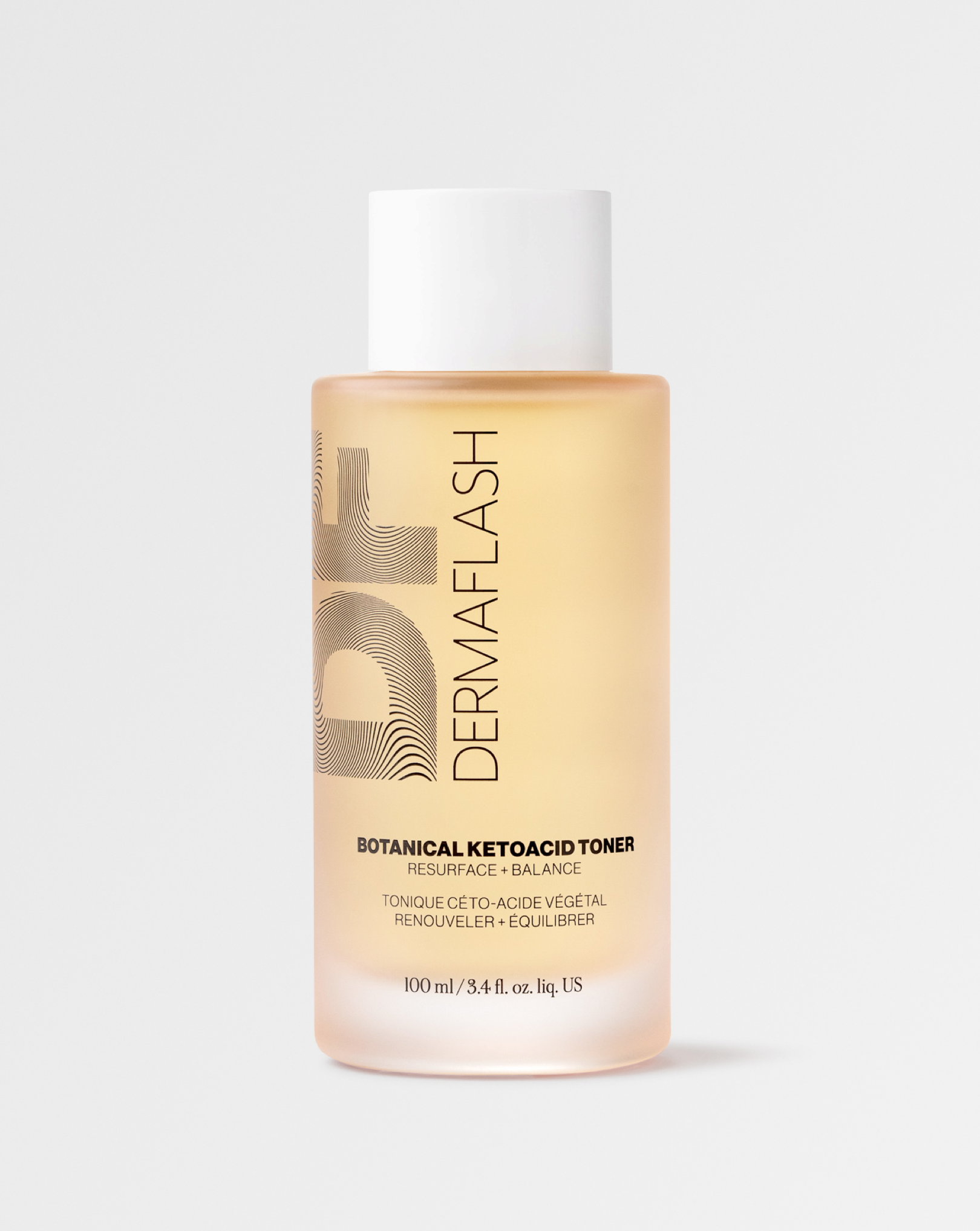
Step 3: Resurface Daily with Botanical Ketoacid Toner
A consistent, gentle daily toner is one of the simplest ways to support skin clarity between your weekly LUXE+ treatments. Botanical Ketoacid Toner is formulated for all skin types (including sensitive) and encourages cellular turnover without the irritation that can come from harsher acid toners.
Key actives include:
- Botanical Ketoacids from the Hibiscus flower: Gently resurface and renew without irritation
- Lactic, Malic + Encapsulated Salicylic Acid: Gently exfoliate and help clear pores without drying skin
- Ectoin: Reduces inflammation while protecting skin from UV, pollution and blue light (three of the primary external triggers for hyperpigmentation)
- Probiotics: Balance skin's microbiome and support a healthy barrier
Use Botanical Ketoacid Toner daily. It pairs perfectly with LUXE+ and DERMAPORE+ to boost and extend the exfoliating and pore-clearing benefits of your sonic devices.
Step 4: Keep Skin Cool + Calm with DERMAFLASH COOL
This step might not be the obvious one, but it's one worth taking seriously, especially if you're in a warmer climate or dealing with PIH. As we mentioned, heat and inflammation are direct drivers of melanin production. Managing both is a meaningful part of any hyperpigmentation strategy.
DERMAFLASH COOL is a patented sonic facial massage device powered by proprietary SonicCool™ + Copper Technology. It reaches an industry-leading low temperature in seconds (no freezing required) and channels high-frequency sonic waves to boost microcirculation, support lymphatic drainage, and soothe skin on contact.
Incorporate COOL into your morning routine to help manage inflammation from overnight recovery or use it after any treatment to calm and soothe your skin.
Don’t forget your SPF!
It’s non-negotiable: Wear SPF every single day. All of your exfoliation and brightening work will be undermined if UV exposure continues triggering melanin production. SPF is the most important step in any hyperpigmentation protocol — every morning, year-round, no exceptions!
Consistency Is the Key
Hyperpigmentation doesn't appear overnight, and it won't resolve overnight either. What makes the difference is a consistent routine that addresses the problem from multiple angles:
- Removing surface pigment through exfoliation
- Targeting the underlying process with proven actives
- Calming inflammation that drives melanin production in the first place
DERMAFLASH tools and skincare are designed to work together to give you a clinically substantiated skincare routine to help prevent and correct hyperpigmentation—on your schedule, without compromising your skin.


